
Research Centers
Carlsbad Environmental Monitoring & Research Center (CEMRC)
CEMRC is a division of the College of Engineering at New Mexico State University. This 26,000 ft2 radiochemistry facility includes environmental and general radiochemistry laboratories, a special plutonium-uranium lab, an in vivo bioassay facility, mobile laboratories, computing operations and offices. The facility can perform a wide range of environmental and radiochemistry work, characterization, monitoring, and feasibility studies in support of performance assessment, radiological and environmental training and education, subsurface flow and transport experiments, nuclear energy issues, and issues involving Homeland Security particularly those involving radiation dispersal devices (RDDs or dirty bombs). CEMRC's programs include: environmental monitoring of almost any radiological and inorganic constituent; actinide chemistry and repository science particularly concerning the environmental behavior of Pu, Am, U and Np; dirty bomb mitigation research and training particularly for 137Cs and 60Co, head space gas and volatile organic compound (VOC) analyses; in vivo and in vitro bioassay, whole body dosimetry, military small arms range clean-up, evaluation and design of innovative treatment technologies, and soil, water, air and waste characterization.
Funding : Dept. of Energy, Los Alamos National Laboratory (LANL), Sandia National Laboratory (SNL), and Nuclear waste Partnership, LLC (NWP)
Contact : Dr. Lambis Papelis

CBBG: Center for Bio‑Mediated & Bio‑Inspired Geotechnics
The goal of CBBG is to develop and implement into practice nature-inspired sustainable solutions to geotechnical engineering and infrastructure problems in four research thrust areas. The center-wide thrust areas include hazard mitigation, infrastructure construction, resource recovery, and environmental protection and restoration.
Funding : National Science Foundation
University Partners : Arizona State Univ, Univ. California Davis, Georgia Tech
Contact : Dr. Paola Bandini

DigiCARES: AI-driven Digital Twinning for Climate-Aware Resilience
DigiCARES is a transformative initiative designed to strengthen energy system planning and operations across New Mexico, Montana, Oklahoma, and Alabama. By leveraging advanced artificial intelligence, digital twin technology, and renewable energy solutions, the project aims to directly benefit communities in these regions.
The goals of DigiCARES are to optimize energy utilization, expand renewable energy integration, and enhance climate resilience. At the same time, the project places strong emphasis on workforce development in AI and energy systems, while fostering diversity and inclusion in STEM education.
To achieve these goals, DigiCARES is developing an AI-driven digital twin that will enable communities and utilities to become more climate-aware, adaptive, and resilient.
Contact : Dr. Di Shi
DREAM Research Center
Through the DREAM Research Center, we are building the foundational cyber-infrastructure that will bring Distributed Intelligent Additive Manufacturing (DIAM) to New Mexico and beyond. Collaborating across 4 research institutions with specialized skillsets in cybersecurity, artificial intelligence, distributed networking systems, advanced manufacturing, and industrial engineering, we are funded by an EPSCoR Research Incubators for STEM Excellence (E-RISE) grant awarded in 2024.
Contact : DREAM
ReNUWIt: Reinventing the Nation's Urban Water Infrastructure
Re-NUWIt is a multi-institution research center whose goal is to change the ways in which we manage urban water. Our vision is of safe, sustainable urban water infrastructures enabled by technological advances in natural and engineered systems and informed by a deeper understanding of institutional frameworks.
Funding : National Science Foundation
University Partners : Stanford Univ, Univ California Berkeley
Contact : Dr. Nirmala Khandan
iCREDITS
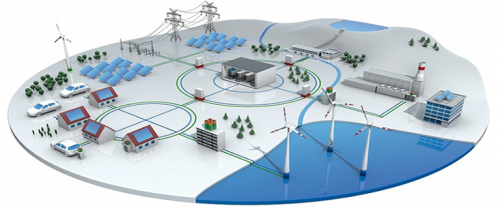
iCREDITS was established at NMSU in 2014, with a grant awarded from the National Science Foundation. The Center brings together experts in electrical engineering, computer science, mathematics, management, and education. Its goal is to serve as a new epicenter for research and training in smart grids.
Funding : National Science Foundation
Contact : Dr. Olga Lavrova
IDEAL Center: Integrated Digital Enterprise Accelerator Laboratory
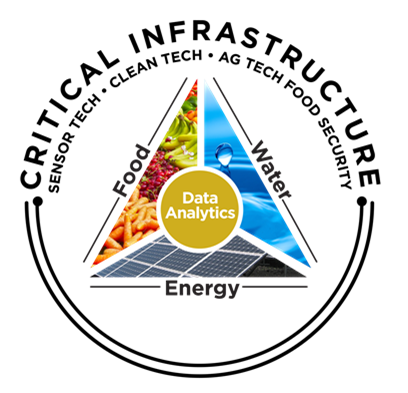
The IDEAL Center at the New Mexico State University is a grid-connected, reconfigurable medium- to high-voltage research testbed. The Center supports realistic testing and demonstration of microgrids, renewable energy, energy storage, advanced power electronics, electric vehicles, hydrogen systems, cybersecurity, and artificial intelligence-based grid controls. The goal of the Center is to conduct research, validate and de-risk smart grid and grid modernization technologies, while supporting technology commercialization and hands-on workforce development across New Mexico.
Website : https://ideal.nmsu.edu/
Contact : Dr. Olga Lavrova
National Alliance for Water Innovation (NAWI)
The National Alliance for Water Innovation (NAWI) is a research consortium formed in 2017 to partner with the U.S. Department of Energy to create the Energy-Water Desalination Hub. NAWI envisions an affordable, energy-efficient, and resilient water supply for the U.S. economy through decentralized, small-scale, fit-for-purpose desalination.
Funding : Department of Energy
Contact : Dr. Pei Xu

New Mexico Produced Water Resource Network
New Mexico State University (NMSU), working collaboratively with the New Mexico Environment Department (NMED), is host to the New Mexico Produced Water Research Consortium (Consortium). The Consortium is a trans-disciplinary public-private partnership comprised of academia, state and federal agencies, national laboratories, and the private sector. The Consortium focuses specifically on conducting scientifically-based research to support and foster regional sustainability. Through this Consortium, New Mexico will continue to lead the country in advancing scientific and technological solutions related to the treatment and reuse of produced water generated by the oil and gas industry.
Contact : Dr. Zachery Stoll

NuChemE Pipeline
The NuChemE Pipeline aims to expand the size and diversity of the available workforce with skills to manage radioactive tank waste through capacity building, interdisciplinary training, and hands-on experiences. The long-term goal is to develop a new interdisciplinary graduate certificate at New Mexico State University that can be completed remotely by students from science, engineering, and business backgrounds to enhance their knowledge and experience in Department of Energy Environmental Management-needed areas.
Contact : Dr. Catherine Brewer